Mercedes-Benz has strengthened its partnership with Taiwanese energy company ProLogium to advance solid-state battery technology. The two firms have been working together for over a decade to bring this technology to the auto industry. ProLogium’s fourth-generation solid-state batteries feature a non-flammable inorganic electrolyte.
These batteries offer higher energy density, support faster charging, are safer, and last longer than traditional lithium-ion batteries. Mercedes will test the safety credentials of ProLogium’s solid-state batteries, including electrical, thermal, and safety testing at its facilities and at third-party testing institutes.
The batteries use ceramic separator technology and have a non-flammable inorganic electrolyte, enabling fast charging and high power output. Mercedes-Benz Group AG member of the Board of Management, Jörg Burzer, said the partnership with ProLogium is an example of how the company brings expertise together to advance next-generation battery technologies.
ProLogium is planning a large solid-state battery plant in Dunkirk, France, with a capacity of up to 44 GWh. This factory will allow the company to provide cells to customers across the continent, including Mercedes. The German brand is also testing lithium-metal battery cells from American company Factorial Energy.
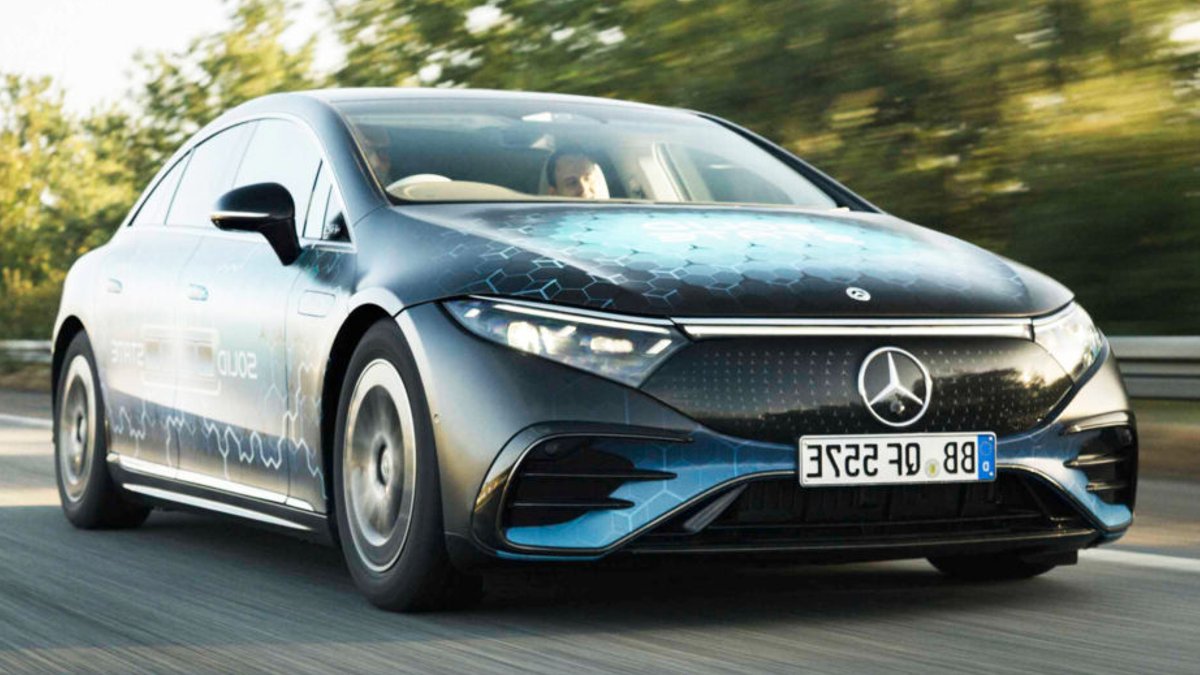
Last year, a Mercedes-Benz EQS equipped with one of Factorial’s solid-state battery packs was driven 748.8 miles on a single charge. The EQS finished the test with an estimated range of 85 miles left. This development could help reshape the automotive industry, with some solid-state batteries potentially ready to hit the market within the next 12 months.
For the people most affected by this development, the potential benefits are significant. With solid-state batteries offering faster charging and longer ranges, electric vehicle adoption could become more widespread. As the technology continues to advance, it will be important to see how it is integrated into the automotive industry.
ProLogium already operates a large battery factory in Taiwan and is planning to expand its production capabilities in Europe. The company’s partnership with Mercedes-Benz is a key step in bringing solid-state battery technology to the market. Several major automakers, including BYD, Toyota, Nissan, Honda, VW, Stellantis, and Chery, are also developing and testing solid-state batteries, which will likely shape the future of electric mobility.


