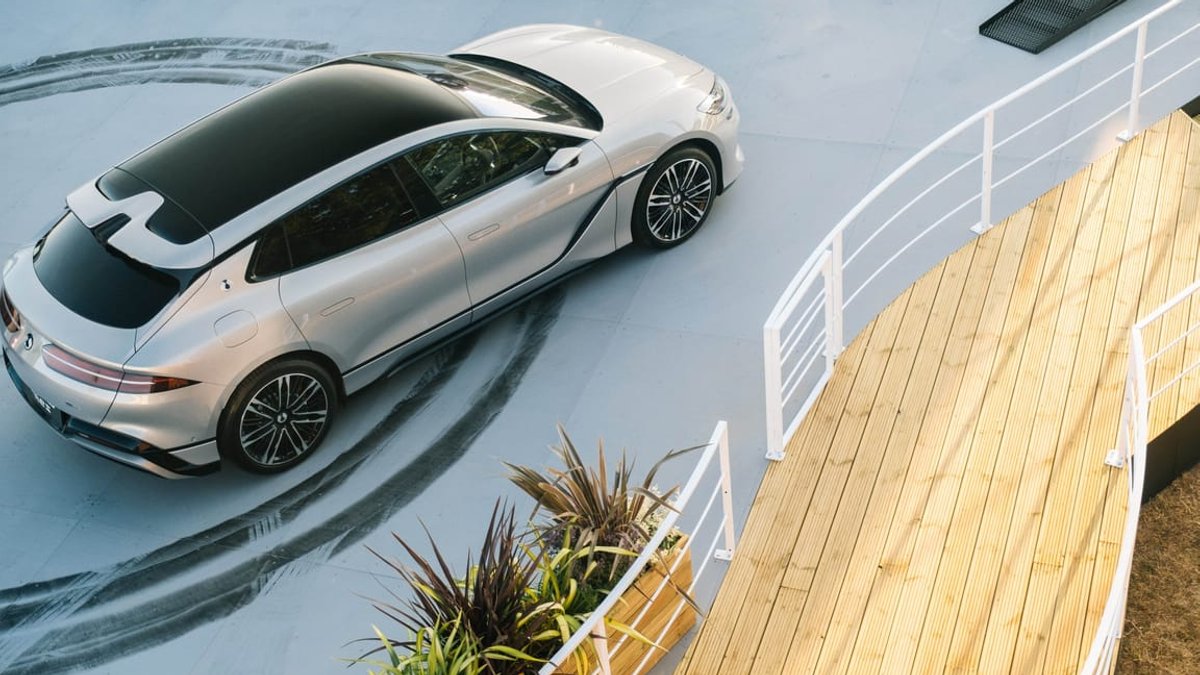
The first car from Denza to arrive in the UK later this year is the Z9 GT, a high-tech electric vehicle that positions itself as a rival to the Porsche Taycan. Beyond its power—offering up to 1,140 horsepower in its all-electric version—the Z9 GT stands out for its self-parking capabilities, which border on the theatrical.
Denza, a premium sub-brand of BYD, calls itself “technology-oriented,” and the Z9 GT reflects that focus. The car’s autonomous parking features handle everything from tight parallel spots to awkwardly angled bays.
How the Z9 GT handles parking
The system operates similarly to those in other modern cars, identifying spaces and maneuvering into them with minimal input. Drivers activate it via a physical button on the dash, followed by two taps on the 17.3-inch central touchscreen. While smooth, it occasionally struggles with faded parking lines or oddly shaped bays.
If the car misses a spot, drivers can manually select one using the bird’s-eye-view camera. They drag a virtual box to define the desired position and orientation. For particularly tight spaces, remote parking lets the driver step out and control the car via a smartphone app.
The Z9 GT doesn’t stop at basic self-parking. It introduces several unconventional maneuvers, each with varying degrees of practicality.
The party tricks—and their limits
One unusual feature is “toe-out rotation.” When parallel parking in a space barely long enough for the Z9 GT’s 5.2-meter frame, the car drives in nose-first. It then uses rear-wheel steering to angle the wheels outward. By driving the rear wheels in opposite directions, the vehicle shifts the rear end toward the curb. The effect looks unsettling but works in tight urban areas. However, the long-term impact on tire wear remains unclear.
Another mode, “crab walk,” lets the rear wheels mimic the front wheels’ angle, allowing diagonal movement. The sensation inside feels odd, and practical uses are rare. Most drivers will find it more of a novelty than a useful tool.
The most dramatic feature is the “compass turn,” which spins the car around its own axis. By driving the front wheels in reverse while the rear wheels move in opposite directions, the Z9 GT executes a full 360-degree rotation. This eliminates the need for multi-point turns in dead ends. In practice, the process feels jarring, especially on rough surfaces, and puts noticeable strain on tires. The system even allows a full 360-degree spin, which serves no real purpose beyond spectacle.
These features may seem like solutions in search of a problem. Most drivers will use them once to impress friends before returning to manual parking. The technology is clever, but its real-world value is limited.
The Z9 GT’s parking systems reflect a broader trend in automotive design. Convenience features are increasingly marketed as essential rather than optional. For some buyers, the ability to ease into tight spots without hassle might justify the car’s premium price. For others, it adds unnecessary complexity to an already crowded cockpit.
A car built for show, but not always for go
The Z9 GT arrives in the UK in October, with deliveries starting shortly after. Pricing hasn’t been confirmed, but its positioning as a Taycan rival suggests a high cost. Buyers will need to decide if they want a high-performance electric shooting brake—or if they’ll pay for parking tricks they may never use.
During a hands-off demonstration at the Goodwood Motor Circuit, the car’s autonomous maneuvers worked as advertised. The experience was more impressive than intuitive. The toe-out rotation and compass turn felt like parlor tricks—fun to watch but unlikely to become daily habits.
Denza’s approach isn’t entirely without merit. In congested cities where parking is a daily frustration, even small improvements in maneuverability help. The Z9 GT’s systems won’t replace human judgment, but they could make tight spaces less stressful.
The car offers a glimpse into a future where vehicles handle tedious tasks. Whether that future fully arrives remains uncertain.
For those interested in how other brands are rethinking vehicle controls, Land Rover’s shift away from physical buttons shows a similar push toward innovation.


