Chinese automotive brands are rapidly reshaping Australia’s new-vehicle market, with six recently introduced or relaunched marques boosting their combined deliveries from 6,773 to 54,465 vehicles between the first nine months of 2025 and the same period this year.
Focusing only on marques with available comparative year-on-year sales figures, this growth represents a 704.1 per cent increase, pushing their combined market share from approximately 0.72 per cent to 5.69 per cent within 12 months. The 47,692 additional vehicles added by these manufacturers came despite the national new-vehicle market expanding by roughly 18,700 units over the same period.
Rapid Market Penetration
The speed at which Chinese manufacturers are establishing themselves in Australia is notable, given that over a dozen brands have entered or re-entered a market already crowded with over 1.2 million annual sales. Their success stems from an increasingly diverse range of battery electric, hybrid, and plug-in hybrid vehicles alongside conventionally powered models.
New Chinese Automakers Enter Australia
Starting in late 2024, Chinese automakers like Zeekr, XPeng, Leapmotor, and Deepal entered Australia, with Geely, Omoda Jaecoo, GAC, and Denza following shortly after. Farizon and Foton bolstered the Chinese commercial vehicle sector, while Forthing became the newest addition to the lineup.
These newcomers build on earlier growth from BYD, GWM, Chery, and MG, all of which have secured substantial market positions. Combined VFACTS and Electric Vehicle Council figures show approximately 957,700 new vehicles sold nationally during the first nine months of 2026, a two per cent increase over the previous year.
However, modest overall demand growth masks a significant redistribution of sales between competing manufacturers. Geely recorded the largest volume improvement, rising from 3,197 deliveries to 23,632, a 639.2 per cent increase. Its EX5 electric SUV, Starray EM-i plug-in hybrid, and newer EX2 electric hatchback drove this expansion.
Geely and Omoda Jaecoo Lead Growth
Omoda Jaecoo followed with 15,456 deliveries compared to 2,144 in the previous period, representing 620.9 per cent growth. The Chery-owned brand increased its market share to 1.61 per cent, supported by an expanding SUV range and growing demand for hybrid and plug-in hybrid offerings.
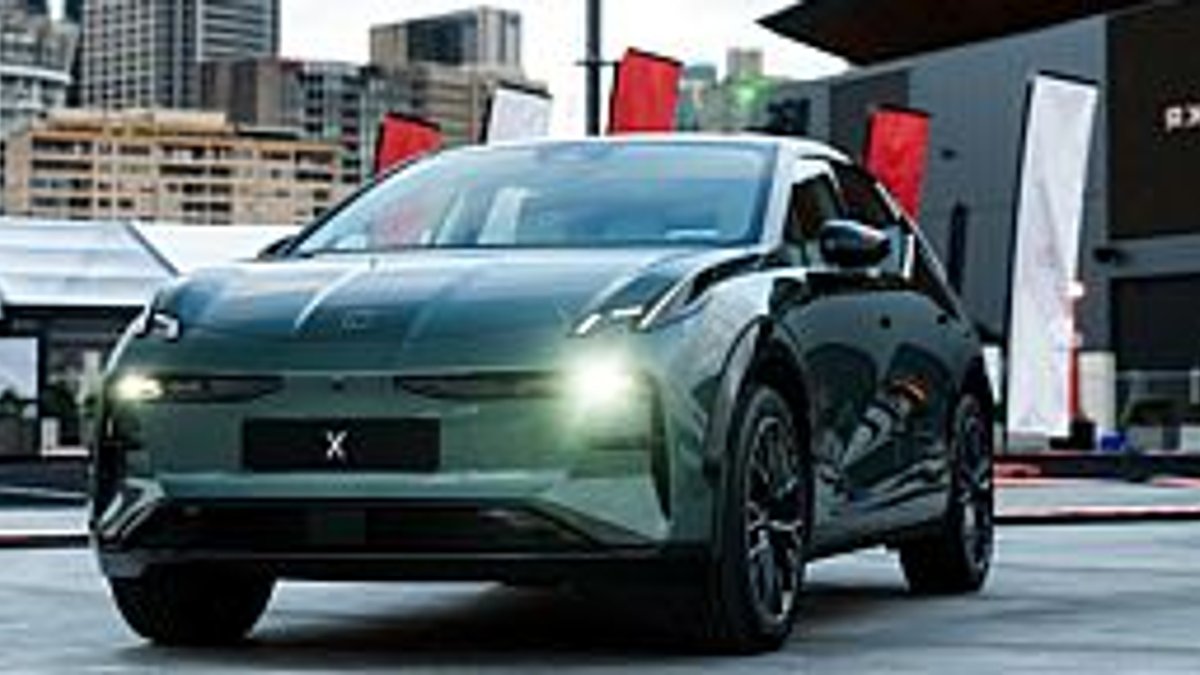
Zeekr achieved the largest percentage increase among comparable marques, with sales rising from 730 to 12,120 vehicles, a 1,560.3 per cent improvement. The Geely-owned premium brand benefited particularly from its 7X medium SUV, which quickly became one of Australia’s strongest-selling battery-electric models.
Together, Geely, Omoda Jaecoo, and Zeekr delivered a total of 51,208 vehicles by September’s end.
The remaining brands in the focus cohort showed more modest growth. Leapmotor increased from 452 to 1,168 vehicles, Deepal improved from 250 to 924, and Foton returned to the market with 1,165 deliveries after having no comparable sales previously.
Denza, GAC, XPeng, and Farizon collectively contributed another 7,995 sales during the first nine months of 2026.
This total excludes unverified sales from MG’s IM Motors, Forthing, and long-standing Chinese brands like BYD, GWM, MG, and core Chery.
Intensifying Competition in the Market
This influx is intensifying rivalry both among Chinese automakers and against traditional manufacturers. Established Chinese brands have already pushed several long-time market leaders out of Australia’s top 10, while newer players are now securing their own footholds.
In contrast, several of Australia‘s longest-established automotive brands are experiencing substantial declines in sales and market share as competition intensifies. Toyota recorded 28,865 fewer deliveries during the first nine months of 2026 compared with the corresponding period last year, a 15.9 per cent decline. Mazda and Ford experienced falls of 16.2 and 13.8 per cent, respectively.
Together, these three manufacturers recorded 50,019 fewer sales year-on-year, exceeding the 47,692 additional deliveries achieved by six recently introduced Chinese marques over the same period. While the figures do not demonstrate a direct transfer of customers, they highlight how Australia’s relatively stable new-vehicle market is being redistributed among an expanding field of competitors.
Traditional Brands Face Declining Sales
Early signs of this shift are visible in individual brand performance. Tesla, which held a 10.2 per cent market share in 2021, has seen its position erode as Chinese manufacturers gain traction. Hyundai and Kia, though still top sellers, face increasing pressure from new entrants offering competitive pricing and advanced electric vehicle technology. Dealer networks are also shifting, with some established dealerships reporting declining sales while new Chinese brand dealerships rapidly expand across major metropolitan areas.
Challenges for Established Manufacturers
The rise of Chinese automotive brands in Australia is increasing pressure on established manufacturers, who are competing for a share of a stable market. As newer brands gain traction, traditional manufacturers face declining sales volumes and shrinking market shares. This shift is particularly evident in Australia’s top 10 sales rankings, where established Chinese brands have displaced several longstanding marques.


