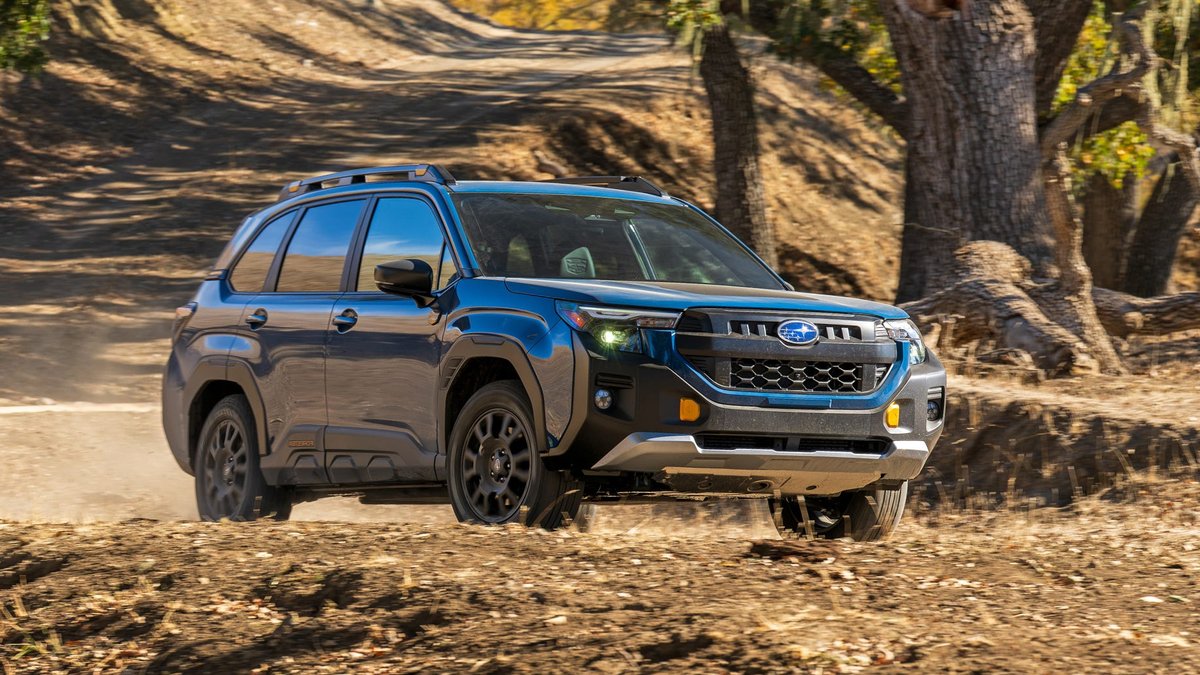
The 2027 Subaru Forester Wilderness Hybrid arrives as a fresh option for drivers who want off-road capability without the drawbacks of traditional body-on-frame SUVs.
Hybrid Powertrain Boosts Efficiency
Subaru pairs a 162-hp 2.5-liter flat-four engine with a 118-hp electric motor that is integrated directly into the continuously variable transmission, and a 1.1-kWh battery tucked under the rear cargo floor. Together they deliver 194 hp and torque that exceeds the non-hybrid Wilderness’s 178 lb-ft, giving the vehicle a noticeable surge in low-speed pull.
Fuel-economy ratings improve from 24/28/26 mpg to 33 mpg city, 29 mpg highway, and 31 mpg combined. The higher numbers translate into fewer stops at the pump on long trips and a lower overall carbon footprint for owners who travel both on pavement and on trail.
Off-Road Equipment Remains Rugged
The model retains the same off-road suspension, offering 9.3 inches of ground clearance, X-Mode drive modes, and 17-inch wheels wrapped in Yokohama Geolandar all-terrain tires. Underbody cladding and unique front and rear fascias provide approach, breakover, and departure angles of 23.5°, 20.6°, and 25.5°, respectively.
Those angles surpass most direct competitors and even outpace several traditionally hard-core SUVs, such as many trims of the Toyota 4Runner.
Customer feedback prompted Subaru to retune the suspension, addressing the added weight while improving ride quality on both pavement and trails.
In the broader market, this shift mirrors a trend where manufacturers blend crossover practicality with genuine off-road features, offering a middle ground that appeals to drivers who need occasional trail capability without sacrificing daily drivability.
Trade-offs and Practicality
The AWD system receives updates: hybrids now deliver more electric torque from a stop when X-Mode is active, aiding steep climbs, and the traction-control algorithm distributes power more smoothly in low-grip conditions.
Towing capacity drops sharply from 3,500 lb to 1,000 lb, still enough for a kayak but far below the limits of many body-on-frame rivals.
It also eliminates the full-size spare tire, freeing space that could accommodate a spare-tire carrier on the trailer hitch. This decision reduces weight and opens room for additional gear, a trade-off many adventure-oriented buyers accept.


