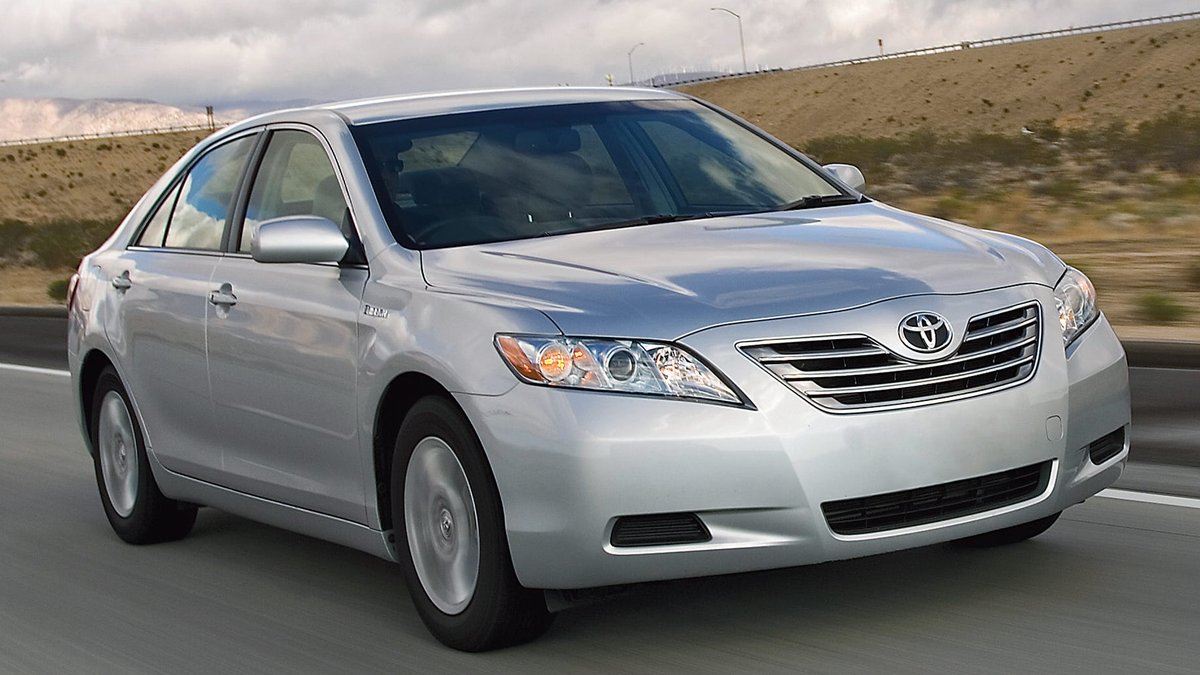
A 2007 Toyota Camry Hybrid completed a 25,000-mile endurance trial in early 2008, proving skeptics wrong about hybrid reliability. The vehicle returned to a Toyota dealership after logging more miles than any other hybrid in the test fleet, with no significant mechanical failures reported. The sole recorded issue, a check-engine light, was later disabled by the technical editor after they documented the error code. Dealership technicians initially expressed confusion over the code, but the car otherwise operated without further complications until its retirement from the test.
The test lasted 17 months and included varied driving conditions, from stop-and-go city traffic to sustained highway speeds. Contrary to expectations, the hybrid’s fuel efficiency extended beyond urban environments. On freeways, it often achieved close to 40 miles per gallon, though efficiency dipped into the low 30s after exits. Across the entire test, the Camry averaged 33.5 miles per gallon, saving 187 gallons of gasoline, equivalent to $586 in Los Angeles fuel costs at the time. This efficiency also translated to a reduction of 1.77 tons of CO₂ emissions over the 25,000 miles.
Maintenance costs aligned with those of a conventional Camry, with five service visits totaling $392.71 for standard upkeep, including oil changes and fluid checks. By the end of the trial, the hybrid’s resale value remained $3,140 below its original sticker price, a figure that showed both its durability and the rising demand for fuel-efficient vehicles.
Driver reactions to the hybrid’s characteristics varied widely. Some criticized its 7.7-second 0-60 mph acceleration as sluggish, while others commended its near-silent operation at traffic lights and the distinctive hum of regenerative braking during deceleration. One tester described it as an “appliance,” noting its lack of driving engagement, whereas another achieved 477 miles on a single tank during a trip to Lake Tahoe, including high-altitude mountain passes. A third driver joked that the car’s button-start feature made it feel “dead” behind the wheel.
Brake performance elicited mixed feedback. Certain drivers found them overly sensitive, with abrupt shifts between electric and engine power assistance. Others reported no issues beyond occasional roughness during transitions. The hybrid’s steering and handling were frequently dismissed as uninspired, reinforcing its reputation as a practical vehicle rather than an engaging driver’s car.
The Camry Hybrid fulfilled its primary objective: delivering efficiency without sacrificing core functionality. While it failed to excite performance-oriented buyers, it outperformed expectations for those prioritizing fuel economy, dependability, and environmental advantages. The test concluded with the hybrid’s replacement by another long-term project, but its blend of practicality and performance continued to spark debate among drivers: What truly defines value in a car?


