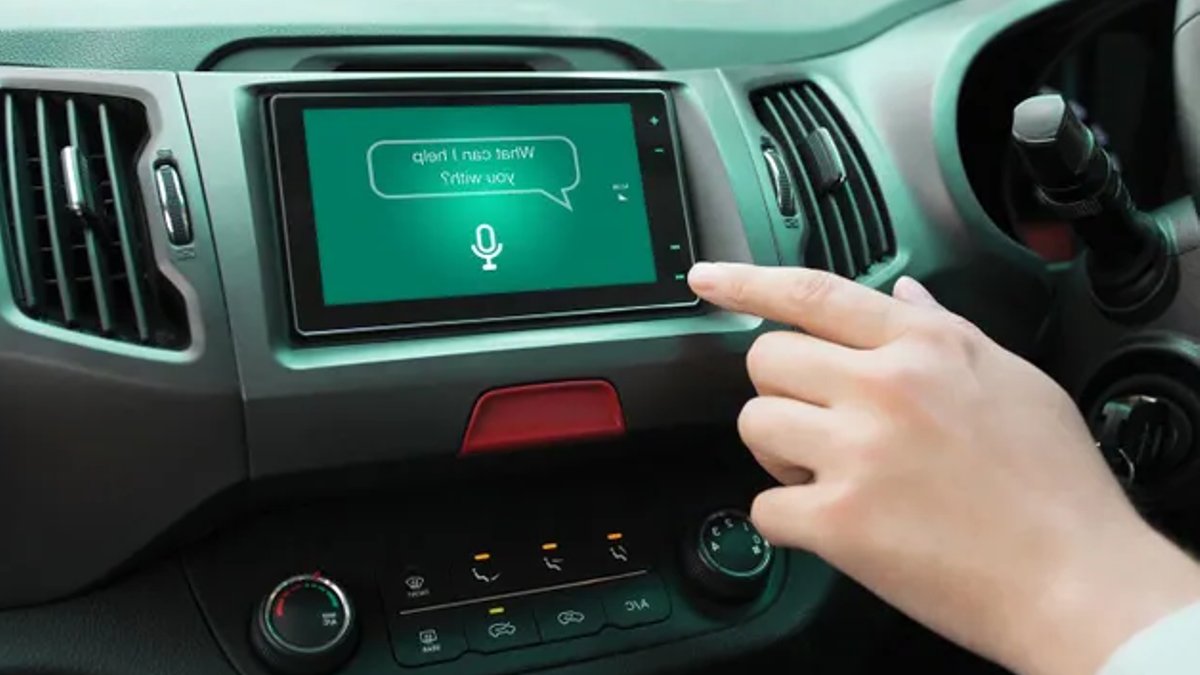
Artificial intelligence agents built into car cabins could soon become one of the biggest selling points for automakers—and one of their biggest risks.
Steven Cochrane, vice president of data and AI at automotive connectivity software supplier Cubic3, said the technology will free up time for drivers and passengers but also expose carmakers to new dependencies on third-party providers. The change is already underway, with consumer expectations rising faster than the industry’s ability to deliver.
The cabin as a third space
For many, the car has become a place between home and work where downtime can be productive or personal. Cochrane said AI agents will help fill that gap, turning commutes into opportunities to handle tasks that once required a phone or laptop.
People want to do more while driving. The main challenge is the interface. With autonomous driving still in its early stages, voice commands remain the primary way to interact with in-car AI.
“It has to be really clean and simple because it’s voice,” Cochrane explained. The goal isn’t just conversation—it’s getting things done.
He cited Cerence’s AI-powered chatbot, demonstrated at the IAA Mobility 2025 auto show, as an example of how these systems might work. Microsoft’s push into in-car productivity suites also signals where the market is headed: a mobile office where emails, reservations, or even personal errands can be handled mid-journey.
“I need to order flowers for my wife’s anniversary, or I want to book a restaurant,” Cochrane said. “People don’t just want a list of nearby options. They want to say what they need, interact through voice, and have it done.”
Consumer demand is already strong. ABI Research estimates AI-driven cabin features will grow from 5 million vehicles today to 70 million by 2035. If the technology fails to meet expectations, drivers may return to their phones, making the feature pointless.
Related: Ionna beats Tesla in EV charging study
The hidden risks of dependency
The larger challenge isn’t just building the AI—it’s managing the infrastructure behind it. Automakers currently control the cockpit, but once AI agents connect to external digital ecosystems, that control diminishes.
“You’ve broken out beyond your controllable environment,” Cochrane said. “Now you’re dependent on connectivity quality, latency, and the speed of your connection. That makes you reliant on the mobile network operator and where that cloud service resides.”
This creates fragility. A weak signal, a delayed response, or a cloud outage could disrupt the entire experience. In Europe, where drivers cross borders frequently, seamless connectivity becomes even more important.
“It’s about partnerships,” Cochrane said. “How do you build resilience into these interconnected services?”
At the annual Mobile World Congress in Barcelona, collaboration between automakers, network providers, and cloud operators was a recurring topic.
“Standards generate openness, which then speeds up innovation,” he said.
The stakes remain high. If automakers can’t deliver on the promise of AI agents, they risk disappointing customers or losing ground to tech companies that already dominate the digital space. The cabin may be the next frontier, but the rules are still being written.
Reliability will determine whether these systems become essential or forgotten.


