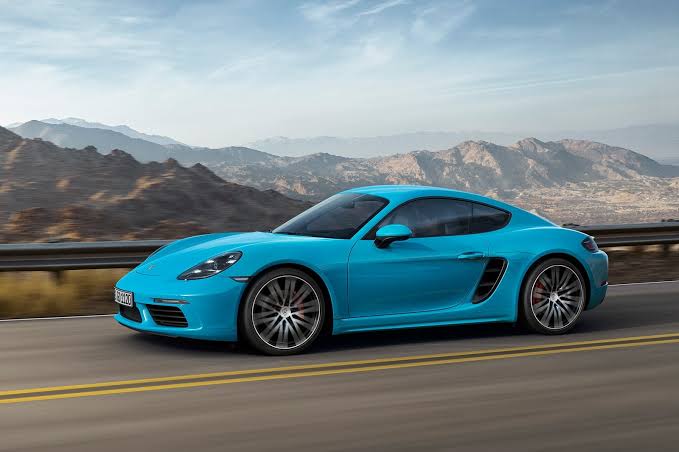
Porsche has confirmed that the upcoming 718 Cayman and Boxster will be offered in both internal‑combustion‑engine (ICE) and electric variants, a shift from the brand’s earlier plan to go fully electric with the sports‑car twins.
CEO says new lineup will blend ICE and EV models
During a strategic‑realignment investor call on September 19, CEO Oliver Blume said the company will “expand and refine our line‑up of ICE models to meet diverse needs and regional market requirements during the transition phase – including newly developed ICE and plug‑in hybrid models.” He added that the approach includes “highly emotional ICE derivatives at the upper end of the model line‑up to complement our future BEV in the 718 segment.”
Blume also noted that an SUV larger than the Cayenne will be produced in both ICE and plug‑in hybrid (PHEV) forms, and that existing ICE and PHEV models such as the Cayenne and Panamera will see life‑cycle extensions well into the 2030s.
Development delays push electric launch further out
The 718 project has faced a series of setbacks, including the insolvency of two battery suppliers and other component delays. Those issues have pushed the launch of the next‑generation models well beyond the original schedule, which had slated an electric‑only Boxster and Cayman for early 2023.
According to the call, the electric versions will carry a significant power increase. The S‑trim is expected to deliver roughly 380 bhp and 440 lb‑ft of torque, while the GTS version could reach about 490 bhp and 550 lb‑ft. A Turbo‑badged model is rumored to top out near 600 bhp and 650 lb‑ft.
Related: BYD’s Denza Z packs 1579bhp in new EV supercar
Battery capacity will differ by model: the S and GTS are said to use 89 kWh packs, and the Turbo will employ a larger 99 kWh unit. All variants will run on an 800‑volt architecture, enabling fast charging and a WLTP range exceeding 325 miles. The battery format is reportedly prismatic rather than cylindrical.
Spying on the upcoming electric 718s shows a longer wheelbase—up to 15 cm more—to accommodate the T‑shaped battery stack between and behind the seats. The rear track is wider, and the rear deck is higher and longer, compensating for reduced luggage space in the front trunk.
Inside, the cabin follows Porsche’s recent design language with three customizable round instruments, physical climate controls, and a central gear selector that resembles a button rather than a lever. Options may include a Weissach performance pack, 3D‑form seats, and ceramic‑composite brakes, though massage seats are not planned.
For a broader history of the model line, see the Porsche 718 Wikipedia page.
Comparing this rollout to Porsche’s earlier electric push, the brand is now hedging its bets. The original plan would have left the D‑segment of the electric sports‑car market to the 718 twins alone, but newer competitors like the MG Cyberster—priced around £55‑60 k—are already in the field. By offering both ICE and EV options, Porsche may capture buyers who remain attached to traditional engines while still advancing its electrified portfolio.
Related: How To Choose The Most Appropriate Pump
In the middle of this transition, the market’s appetite for pure electric sports cars appears muted. Demand for fully battery‑electric models has softened, prompting Porsche to delay some projects. This reflects a broader trend where premium manufacturers face slower adoption rates than volume brands, despite the technical merits of models such as the Taycan.
Production of the new 718 variants will rely on the Mission R architecture, a platform Porsche developed after the Volkswagen Group’s SSP Sport project was postponed to 2028‑2029. The shift to Mission R reflects the brand’s desire for greater control over its EV technology, even as it continues to source components from partners like Northvolt and Rimac.
While the exact pricing for the electric Cayman and Boxster has not been disclosed, analysts expect the figures to be at least on par with the current range‑top models, if not higher, given the added performance and battery technology.
As the launch window narrows toward October 2025, Porsche’s dual‑strategy may prove timely. The absence of direct electric rivals—aside from the Cyberster—means the 718 could still dominate its niche, provided the brand delivers on promised performance and charging speed.


