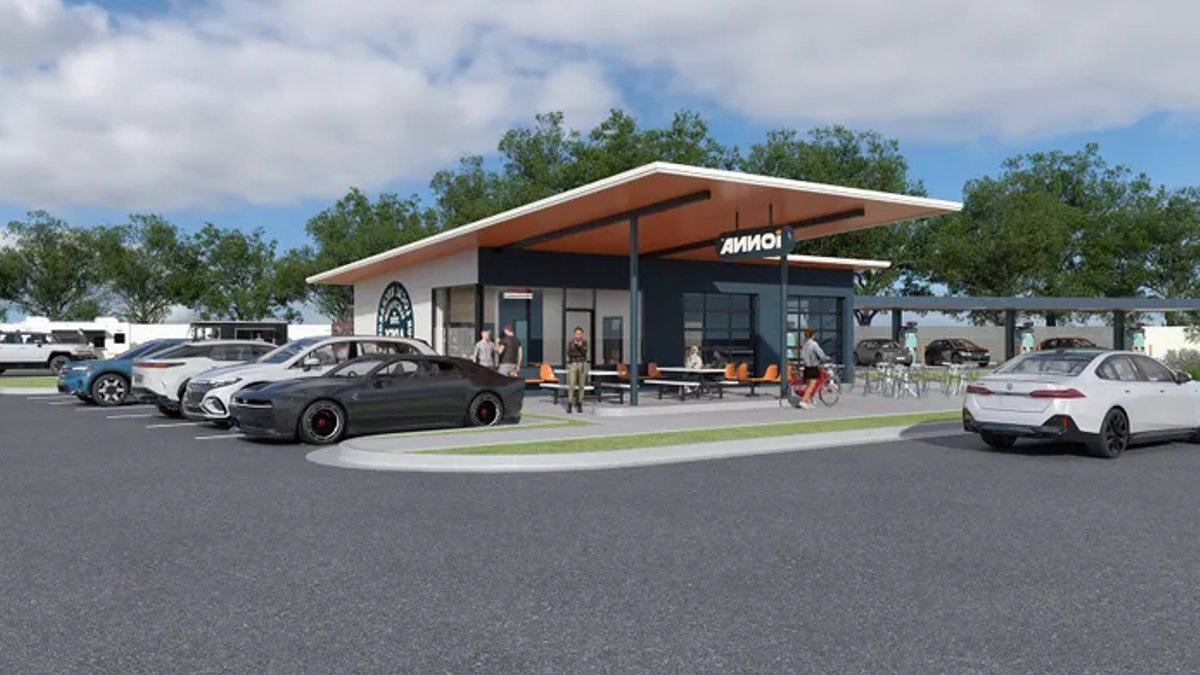
Tesla’s Supercharger network no longer holds the top spot in U.S. public EV charging. Ionna secured first place in J.D. Power’s 2026 U.S. Electric Vehicle Experience Public Charging Study, earning a score of 807 out of 1,000.
Tesla, which previously led the rankings, dropped to fourth with 701 points. Mercedes-Benz and Rivian placed second and third, respectively.
Ionna’s rapid rise
The joint venture, launched in 2024, is supported by eight automakers: BMW, General Motors, Honda, Hyundai, Kia, Mercedes-Benz, Stellantis, and Toyota. Its first fast-charging station, branded as a “Rechargery,” opened in October 2024. Since then, Ionna has partnered with convenience chains Sheetz, Wawa, Casey’s, and Circle K, and pledged $250 million to expand infrastructure in California.
Brent Gruber, J.D. Power’s executive director of EV solutions, said newer networks benefit from modern hardware and design. “Because those networks are more recent, their chargers are new and their locations are optimized for the user experience,” he explained.
Related: Land Rover to Launch Dakar‑Winning Defender for Streets
Gruber added that top performers reflect the features EV owners are looking for — including fast, reliable chargers, more charging ports per location and access to amenities like restrooms and snacks. The 2026 study surveyed 6,594 EV and plug-in hybrid owners, measuring satisfaction across 10 factors, including safety and available activities during charging.
Public fast-charging reliability has reached its highest level since the study began in 2021. Older networks are improving, but newer ones still lead in user experience.
All four top-performing networks in the study are tied to automakers. Newer stations offer cleaner facilities, better placement, and fewer technical issues.
Destination charging lags behind
Fast-charging satisfaction has increased, but public Level 2 chargers—common at hotels, shopping centers, and workplaces—saw a 12-point drop. J.D. Power did not release specific results for Level 2 networks but noted the growing gap between fast and destination charging.
Related: One-off Porsche 911 GT2 RS inspired by Moby Dick
Gruber identified payment issues as a major problem. Few U.S. Level 2 chargers support Plug and Charge, which bills a driver’s account automatically. Most require a credit card or separate app, creating unnecessary steps.
J.D. Power points out that Level 2 charging increasingly requires payment — and that may be getting in the way of satisfaction with the experience. The lack of convenience of payment may be part of the dissatisfaction.
As standards rise, networks with outdated hardware, cumbersome payment systems, or poorly chosen locations risk losing users. The shift shows how quickly expectations are evolving.


