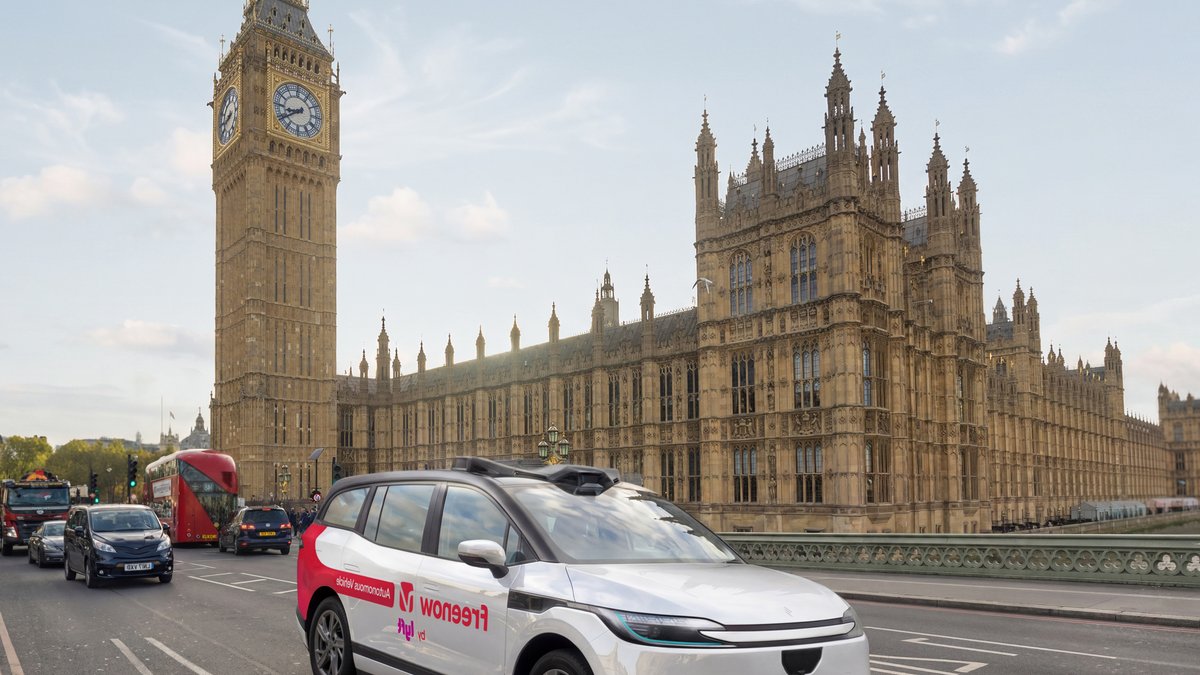
London has become the latest testing ground for autonomous vehicles as ride-hailing platform Freenow by Lyft launches trials with Baidu’s Apollo Go fleet in Brent.
The sixth-generation RT6 vehicles, staffed by safety operators, will travel through urban and suburban streets. The initiative follows Lyft’s 2025 announcement with Baidu for European deployment.
Regulatory alignment and hybrid network
Freenow and Lyft have been in extensive discussions with Transport for London (TfL) and the Centre for Connected and Autonomous Vehicles (CCAV), aligning with regulators to support a safe, reliable and sustainable service for Londoners. The autonomous cars will run alongside Freenow’s current taxis and private hire vehicles, forming a hybrid network.
Thomas Zimmermann, CEO of Freenow by Lyft, stated the integration is designed to assist professional drivers while providing Londoners with more sustainable travel choices. “As a platform with deep roots in the taxi industry, our priority is ensuring that autonomous technology supports the professional drivers who keep London moving. By integrating these purpose-built, autonomous vehicles from Baidu’s Apollo Go into the Freenow by Lyft ecosystem, we will give Londoners more sustainable choices to travel, encouraging them to choose shared mobility services over personally owned vehicles,” he said.
Related: Dawsongroup to Acquire Irish Truck Rental Firm
The expanded fleet is expected to shorten passenger wait times as the number of vehicles on the platform increases. Public rides will start in 2027.
Apollo Go’s global ambitions
Baidu’s Apollo Go driverless taxis already operate in cities, mostly in China, and have handled millions of rides without a human being behind the wheel. London’s busy streets present a fresh test, which the company believes will prove its technology is ready for international use.
Nan Yang, vice president at Baidu and general manager of overseas business unit, Intelligent Driving Group, described the London launch as a key milestone. “The arrival of Apollo Go vehicles in London marks a defining milestone in our global expansion. Testing our autonomous fleet in one of the world’s most iconic and complex urban environments validates our technology’s maturity and our commitment to this market. By combining our cutting-edge autonomous driving technology with Freenow by Lyft’s local operational expertise, we are officially moving from vision to reality, together,” Yang said.
Other cities are also preparing for autonomous ride-hailing. Wayve has been developing its technology on UK roads since 2018, and later this year will begin ride-hailing operations in London in partnership with Uber, using a fleet of adapted Ford Mustang Mach-Es. This will also initially be with a safety operator in place behind the wheel to monitor the system.
Related: New road tax scheme takes shape
Recent research by Censuswide reveals strong early interest in autonomous vehicles among Londoners, despite limited first-hand experience: 48% have never ridden one, yet 58% say they would be likely to try it. Support is even higher among younger Londoners, with nearly two-thirds of those under 35 in favor of AVs being available in the capital. A further 25% said they’re excited about having another transport option to choose from.
Asked why they would choose an AV, just over half (51%) cited excitement about the technology, 43% pointed to reliability, and 41% said they would value the opportunity for quiet ‘me time’ during their journey.
The Brent trials represent an early step toward a future where autonomous vehicles may change urban transport, though widespread use remains distant.
For now, the priority is demonstrating the technology can function safely in one of the world’s most demanding cities.


