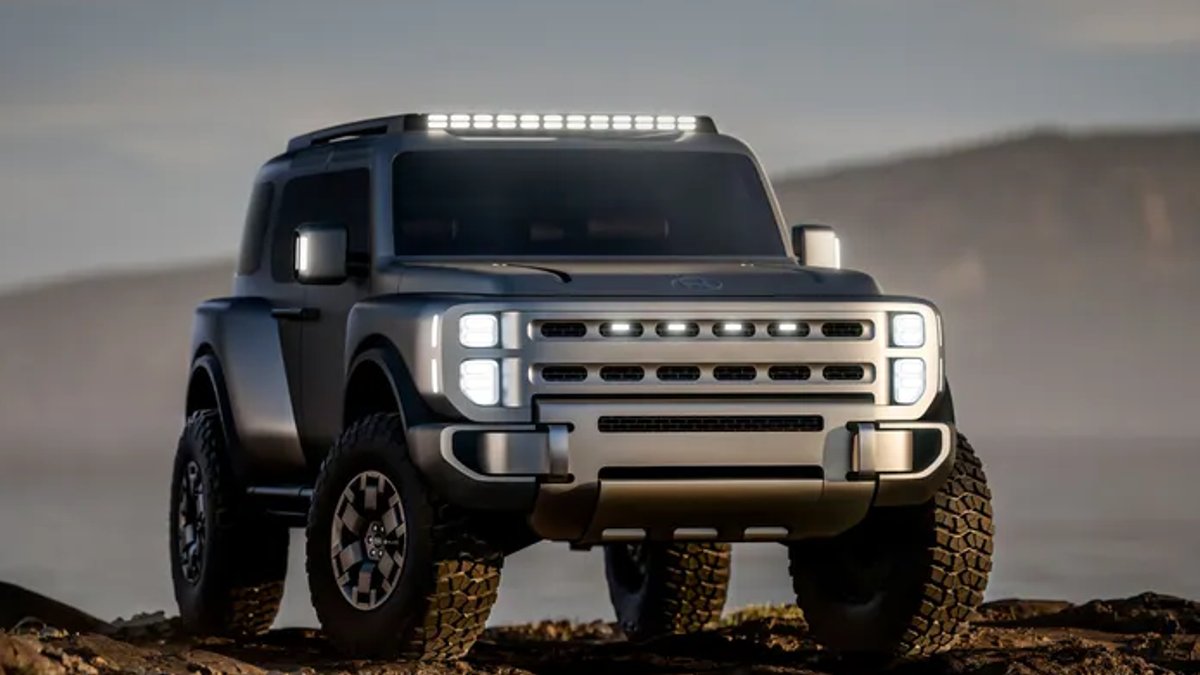
Hyundai Motor Group is eyeing a significant sales boost in North America by targeting untapped market segments, aiming to sell 1.44 million units by 2030, a 20% increase from current levels. This strategic move is part of the automaker’s global sales growth target of 35% by 2030 compared to 2025. To achieve this, Hyundai is focusing on high-profit, high-demand areas where it currently has little or no presence, such as extended-range EVs, off-road SUVs, and performance vehicles.
Identifying Market Gaps
At an investor day presentation, Hyundai revealed that it’s examining potential markets and ‘whitespace’—segments where it currently has little or no presence—to drive global sales growth. CEO Jose Muñoz highlighted opportunities in pickups, light commercial vehicles, and large SUVs, stating, “We are simply taking what we already build to places where we currently do not sell.” By filling these market gaps, Hyundai seeks to tap into segments that can drive significant sales growth and improve profitability.
Hyundai has calculated that there are 26 million units annually in segments it currently has little or no coverage, such as trucks. It represents “close to 30% of the market,” which is highly profitable. Muñoz noted, “The luxury market, the body-on-frame market, the high-performance market, they’re all high-profit markets already for us. We just need to be present in those segments to capture that growth.”
New Products for Growth
Filling these whitespace areas will involve new or refreshed products tailored to meet the demands of these segments. Hyundai is planning to introduce a three-row Santa Fe EREV in early 2027, promising a range of over 600 miles and an “EV-like driving experience.” This model, produced in Alabama, will cater to customers who want the EV experience without changing how they refuel, as mentioned by Muñoz.
Related: Walmart EV network reaches 100th charging station
Additionally, a Genesis extended range EV is also slated for early 2027, further expanding Hyundai’s presence in the luxury EV market. Off-road SUVs, demonstrated by concepts like the Boulder, Ioniq Earth, and Crater, are another growth opportunity. Hyundai is funding development on a body-on-frame architecture for these models, indicating a serious commitment to this segment.
Hyundai’s strategy also involves scaling its hybrid technology to meet the growing demand for more fuel-efficient vehicles. The automaker aims to increase its hybrid sales in North America from the current 8% to 25% by 2026. By 2030, Hyundai plans to have more than 10 hybrid models available in the region, with half of its sales in North America coming from hybrids. These models will be built in both Alabama and Georgia to support a localized product portfolio and supply chain.
Hyundai plans to increase its global production capacity to 1.27 million units by 2030, with 500,000 of those in North America. Between 2026 and 2030, Hyundai plans to launch 36 “new or enhanced models” in North America. This aggressive product offensive is designed to capture a larger share of the North American market and drive significant sales growth for the automaker.


